


 By
By Over the last few years, learning data analytics skills has become one of the most valuable abilities in the job market.
Companies rely heavily on data to make decisions, improve performance, and understand customers. According to research from IBM, the demand for data professionals continues to grow as businesses rely more on data-driven decisions.
Because of this, roles like Data Analyst, MIS Executive, and Business Analyst are in huge demand.
Naturally, many people decide to start learning skills like Excel, SQL, data visualization, and dashboard building.
For that:
- They buy courses.
- They watch YouTube tutorials.
- They download practice datasets.
But after a few weeks or months… many of them stop.
If you look closely, you will notice something interesting:
“Most people don’t give up on data analytics because it’s too hard.”
- “They quit because their learning approach is wrong.”
The good news is that if you understand the common mistakes people make while learning data analytics skills, you can easily avoid them and move forward much faster.
Let’s talk about the real reasons beginners struggle – and what you should do differently.
If you are preparing for your first job, you should also read our guide on how to prepare a data analyst resume.
1. Trying to Learn Too Many Data Tools at Once

This is probably the most common mistake beginners make.
They start with Excel, then someone tells them SQL is important. A few days later they hear about Power BI dashboards. Then someone suggests learning Python for data analysis.
Within a short time, their learning list looks something like this:
- Excel formulas
- SQL queries
- Power BI dashboards
- Python programming
- Tableau visualization
The result?
Complete confusion.
Each of these tools is powerful, but trying to learn all of them together makes the learning process overwhelming.
A better approach
Instead of jumping between tools, follow a simple learning sequence:
- Start with Excel for data analysis
- Then learn SQL basics
- Move to data visualization tools like Power BI
- Finally explore advanced tools if needed
When you focus on one skill at a time, learning becomes much easier and faster.
Focusing on one tool at a time makes it much easier to learn data analytics skills effectively.
2. Watching Tutorials but Not Practicing

A lot of beginners spend hours watching tutorials about data analytics for beginners.
- They watch someone explain Excel dashboards.
- They watch SQL query examples.
- They watch Power BI tutorials.
hoping that simply consuming more content will make them job-ready.
At first, it feels productive because they are constantly learning new concepts and listening to experts explain different tools.
But here is the problem.
Watching someone analyze data is not the same as analyzing data yourself.
Data skills are practical skills. You only improve when you actually work with data.
For example, instead of only watching Excel tutorials, try this:
- Download a sample dataset
- Clean the data
- Create pivot tables
- Build simple charts
You will learn far more in 30 minutes of practice than in 3 hours of watching tutorials.
3. Not Working on Real Projects

Another reason people struggle while learning data analysis skills is that they focus only on theory.
- They learn formulas.
- They memorize SQL syntax.
- They watch videos about dashboards.
But they never apply these skills to real scenarios.
In real jobs, companies expect data analysts to solve problems like:
- analyzing monthly sales data
- identifying customer trends
- preparing performance reports
- building dashboards for management
If you want to truly understand data analytics, start doing small projects.
Small projects allow you to practice what you have learned and turn theoretical knowledge into practical skills.
Here are some beginner project ideas:
- Sales data analysis using Excel
- Customer purchase analysis
- Creating a monthly sales dashboard
- Marketing performance analysis
How It Benefits You
- Projects help you understand how different data tools work together.
- They gradually build your portfolio.
- Over time, you can showcase these projects on your resume, LinkedIn profile, or personal website.
- Recruiters often value practical experience because it shows that you can apply your knowledge to real-world problems.
Watching tutorials and reading articles can help you learn the basics, but real understanding comes when you actually apply those concepts to real data.
Real projects are one of the best ways to learn data analytics skills and gain practical experience.
4. Expecting Too Fast Results
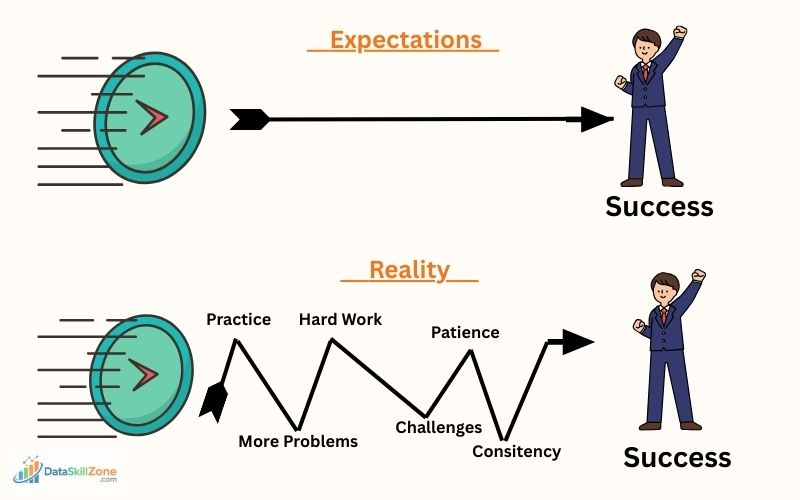
Some beginners start learning data analytics expecting quick success.
They believe something like:
“Learning Excel and SQL in two months doesn’t guarantee you’ll immediately get a data analyst job.”
But learning any professional skill takes time.
When beginners expect fast results, they often become discouraged if they do not see immediate progress. After a few weeks of learning, they may feel frustrated and assume that data analytics is too difficult for them.
In many cases, the problem is not the difficulty of the subject, but the unrealistic expectation of how quickly mastery should happen.
To build a strong foundation in data analysis, you need to practice regularly.
A realistic timeline could look like this:
- 1–2 months learning Excel for data analysis
- 1–2 months practicing SQL queries
- 1–2 months building dashboards and projects
Within 4–6 months of consistent practice, many beginners start feeling comfortable with data tools.
The key word here is consistent.
Even practicing one hour every day can create big progress over time.
People who succeed in data analytics are usually those who stay consistent, keep practicing, and continue improving their skills over time.
5. No Clear Learning Roadmap
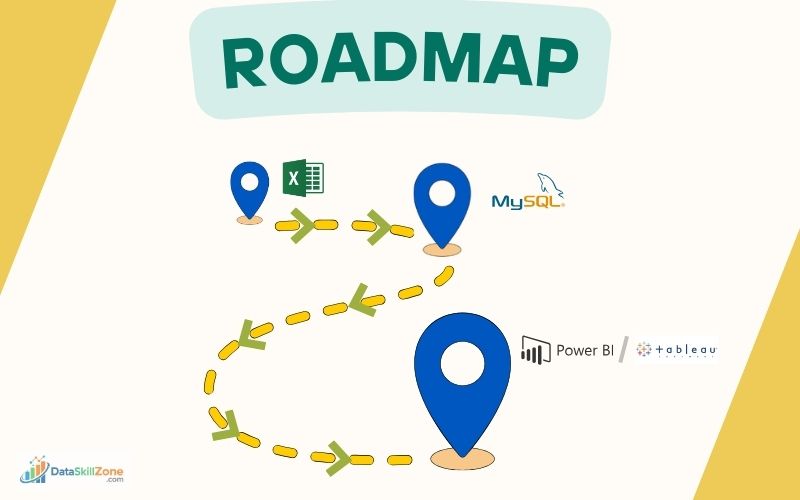
Many beginners start learning data analytics without a clear direction.
They search things like:
- “How to learn data analytics”
- “Best tools for data analysts”
- “Data analyst skills list”
And suddenly they find hundreds of tutorials.
Without a roadmap, it becomes easy to get lost.
A simple beginner roadmap could look like this:
Step 1 – Excel fundamentals
Learn:
- Excel formulas
- Pivot tables
- Data cleaning techniques
Step 2 – SQL basics
Focus on:
- SELECT queries
- WHERE conditions
- JOIN operations
Step 3 – Data visualization
Learn to build dashboards using:
- Power BI
- Tableau
Following a structured roadmap helps beginners learn data analytics skills in a much more organized way.
6. Fear of Technical Tools

Sometimes beginners feel intimidated by technical tools used in data analysis.
Words like SQL queries, databases, and dashboards may sound complicated at first.
But when you start learning step by step, these tools become surprisingly manageable.
For example, most data analysts use only a few SQL commands regularly:
- SELECT
- WHERE
- GROUP BY
- JOIN
If you are new to SQL, you can explore beginner tutorials on SQL basics to understand how queries work.
Once you practice these commands using real datasets, SQL becomes much easier than it first appears.
The same applies to dashboard tools like Power BI.
At first it may look complex, but once you understand how data tables connect with charts and filters, building dashboards becomes almost enjoyable.
7. Giving Up Too Early

This is probably the biggest reason why people fail to learn data skills.
In the beginning, everything feels new and confusing. Excel formulas look complicated. SQL queries feel strange. Data visualization tools look intimidating.
But this stage is completely normal.
Almost everyone who learns data analytics goes through this phase.
The difference between people who succeed and those who quit often comes down to one simple thing:
Successful learners keep going.
They practice a little every day. They experiment with datasets. They slowly build confidence.
Eventually, things start making sense.
8. Comparing Yourself With Others
Another common mistake beginners make while learning data analytics skills is constantly comparing themselves with others.
On social media or online communities, you may see people sharing stories about becoming a data analyst in just a few months. While these stories can be inspiring, they can also create unnecessary pressure.
The truth is that everyone’s learning journey is different. Some people may already have a background in statistics, business, or programming, which helps them learn faster.
Instead of comparing your progress with others, focus on your own improvement.
Keep these points in mind:
- Everyone starts from a different level of experience
- Learning speed varies from person to person
- Small improvements each week are more important than quick results
- Consistent practice matters more than comparing progress
When you focus on improving a little every day, your skills will naturally grow over time. The goal is not to learn faster than others, but to keep learning and moving forward.
How You Can Successfully Learn Data Analytics Skills
If you truly want to build strong data skills for your career, keep the process simple.
Focus on three important things:
1. Follow a clear learning path
- Start with Excel for data analysis, which is still one of the most widely used tools for working with business data., move to SQL, and then learn data visualization tools.
2. Practice regularly
- Try to work with data frequently. Even small exercises help.
3. Build small projects
- Projects show that you can apply your skills to real problems.
The goal should not be to rush the learning process but to build a solid understanding that will stay with you long term.
Over time, these small efforts accumulate and lead to significant improvement.
My Final Thoughts
Learning data analytics skills can completely transform your career opportunities.
Businesses across industries need professionals who can analyze data, generate insights, and support better decision-making.
The reason many people fail is not because the subject is too difficult. Most beginners struggle because they try to learn too many tools at once, rely only on tutorials, avoid real practice, or give up too early.
If you take a different approach – focusing on consistent practice, real projects, and a clear roadmap – your chances of success become much higher.
Start small, stay consistent, and keep improving your skills step by step. Over time, the world of data analytics will become far less intimidating and far more exciting.
If you want to learn data analytics skills successfully, consistency and practice are the most important factors.
2 Comments